
If you’re comparing Scotland and England, the answer to “is university free in Scotland” is: sometimes. Free tuition is available to many scottish students, but it depends on where you normally live, your immigration position, your fee status, and whether this is your first degree.
Quick answer: who actually gets free university in Scotland?
University can be tuition-free for students ordinarily resident in Scotland who are eligible, settled in the UK, and taking a first full time undergraduate degree at scottish universities. The Student Awards Agency Scotland, or SAAS, covers tuition fees for eligible students studying their first undergraduate degree.
That does not mean the whole university education is free. Free tuition applies to tuition fees, not living costs like rent, food, transport, books, or deposits for accommodation from your bank account.
Students from england, wales, northern ireland, the European Union, and the rest of the world usually pay fees unless they meet specific home-status rules.
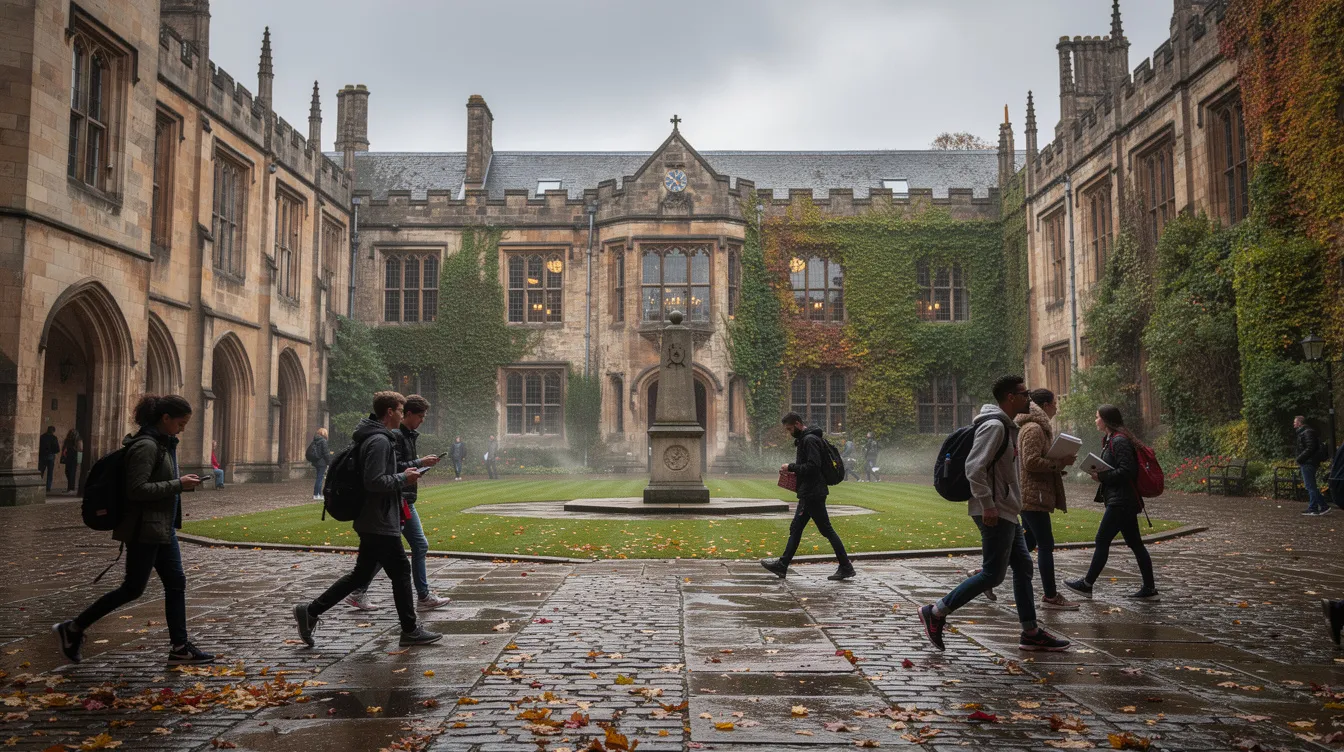
How free tuition in Scotland works
Higher education funding is a devolved matter in the UK, allowing each country to set its own tuition fee rules and limits. That is why Scotland and England work so differently.
For 2025 to 2026, undergraduate home fees in Scotland are capped at £1,820, while students from the rest of the UK are charged up to £9,790 per year. In practice, eligible Scottish students do not pay tuition fees themselves: SAAS pays the £1,820 home fee paid directly to the institution.
This is not a double payment to the student. The money goes to higher education institutions, not into your bank account.
SAAS usually covers tuition for up to five years, enough for a typical four years honours degree plus one extra year if needed. In England, home students usually use student finance to borrow up to around £9,250 a year for university tuition fees.
Part time students in Scotland may also get help, but under different rules.
Who qualifies for free tuition in Scotland?
Eligibility is about fee status, residence, and immigration status, not nationality alone. To be eligible for free tuition in Scotland, students must have a “relevant connection” with Scotland, meaning they must be settled in the UK and ordinarily resident in Scotland for three years prior to the start of their course.
A student must be considered settled in the UK, which means they have no immigration restrictions on their stay, to qualify for home fee status and free tuition in Scotland. To qualify for student support in Scotland, students must generally have lived in the UK for three years before their course starts and be ordinarily resident in Scotland.
Moving from England, Wales, or Northern Ireland purely to study in Scotland usually will not make you resident for Scottish fee purposes. Funding is generally for a first undergraduate degree, not a second undergraduate or most postgraduate courses such as a masters degree.
The scottish government also caps the number of publicly funded places available to local students to manage the policy’s financial sustainability.
Scottish‑domiciled students
Scottish-domiciled means your main home is in Scotland before you start university in Scotland, not simply that you study at a Scottish school.
Students ordinarily resident in Scotland and pursuing their first undergraduate degree are generally eligible for free tuition, with the Student Awards Agency Scotland (SAAS) covering tuition fees for up to five years. Scottish students studying for their first undergraduate degree at a Scottish university do not have to pay tuition fees, as these are covered by SAAS.
Examples include an MA (Hons) at Edinburgh or St Andrews, a BSc at Glasgow, or an MEng at Strathclyde. Some HNC and HND courses can also be funded under separate college rules.
Students from England, Wales and Northern Ireland (RUK)
Students who live elsewhere in the UK are normally “Rest of UK” students when they study in Scotland. They do not get free tuition fees.
Tuition fees in Scotland differ based on home residence status: Home students pay £0, RUK students pay up to £9,535, and international students face varying fees set by universities. Students from the Rest of the UK (RUK) who study in Scotland do not receive free tuition and may face fees up to £9,790 per year, though some universities cap fees to align costs with a three-year degree.
An English student usually uses Student Finance England for loans. On a four-year Scottish course, that could mean four years of borrowing, while a Scottish-domiciled student on the same course may pay £0 tuition.
EU, EEA, and Swiss students after Brexit
Following Brexit, EU students starting their courses in Scotland from the 2021/22 academic year are no longer eligible for home fee status and free tuition, and are instead classified as international students, which results in higher tuition fees.
As a result of Brexit, EU students who began their studies in Scotland after the 2020/21 academic year are subject to tuition fees that can range significantly higher than those for home students, often between £10,000 and £40,000 per year depending on the institution and program.
European Economic Area (EEA) and Swiss nationals who have settled or pre-settled status under the EU Settlement Scheme can still qualify for home fee status and student support in Scotland, similar to the pre-Brexit conditions.
For example, an EU student who moved to Scotland as a child, has settled status, and meets the three years residence rules may qualify like a Scottish-domiciled student. Check UKCISA fee status guidance for further information.
International students from outside the UK and EU
International students means students without UK home fee status, including many from outside the european economic area. International students in Scotland typically pay tuition fees ranging from £10,000 to £40,000 per year, depending on the university and program.
There is no scottish government free university education scheme for these students in Scotland or England. They must also show money for tuition and living costs for a UK Student visa.
Scholarships, Saltire Scholarships, university bursaries, and other funding can help, but they rarely cover every cost.

Special categories and exceptions
Some students with refugee status, humanitarian protection, certain leave to remain, or young unaccompanied asylum-seeker backgrounds may qualify for home support.
Scotland has moved away from older “long residence” rules toward three-year residence rules for some groups. These cases are complex, and SAAS rules may differ from Student Finance England rules.
Four‑year Scottish degrees and how this affects costs
Scottish undergraduate degrees typically last four years compared to three years for most degrees in England, Wales, and Northern Ireland, affecting tuition costs for students.
This model often gives broad study in the first two years before specialisation. Ancient universities may award an undergraduate MA in arts subjects.
For Scottish students with free tuition, the extra year does not add tuition cost, but it adds living costs. For RUK and international students, it can mean an extra year of tuition, unless advanced entry or a three-year route is available.
Living costs: even with free tuition, university is not free
Free tuition does not make university free overall. Students still need to cover rent, food, travel, books, clothes, and social life.
Scotland provides a combination of loans and bursaries to help with living costs, including income-dependent bursaries up to £2,000. Students from Scotland can receive a non-repayable Young Students’ Bursary of up to £2,000, depending on their household income.
Typical student living costs outside London can be around £800–£900 per month. Visa maintenance rules for international students are higher in London than elsewhere in the UK.
Student loans and bursaries in Scotland vs England
SAAS administers student finance for Scottish students, including maintenance loans and bursaries. A young student may receive different support from an independent student, especially if financially independent or assessed on different household income.
In both Scotland and England, grants and bursaries do not need to be repaid, but loans do. Scottish loan repayments are usually Plan 4; England uses other plans such as Plan 2 or Plan 5 depending on start date. After graduation, a graduate repays only when earnings pass the relevant threshold.
So, even when tuition is free, debt-free higher education is not guaranteed.
Part‑time students and alternative study routes
Free tuition rules focus mainly on people who study full time for a first degree, but part time options exist.
Eligible part time students who live in Scotland may get a Part-Time Fee Grant if income is below the threshold, often £25,000, subject to change. It helps pay tuition for recognised courses at Scottish colleges and universities, but usually does not cover living costs.
English-domiciled part-time students usually use Student Finance England, whether studying online, in England, or sometimes in Scotland.

How universities decide your fee status
Every university in Scotland and England assesses fee status when you apply. Scotland commonly uses home Scottish, RUK, and overseas categories; England mainly uses home and international.
Universities apply regulations and ask for evidence, such as passport, visa, settled status, school records, council tax records, and proof of where you were resident.
If you have moved between Scotland, England, another country, or the world more broadly, ask the admissions or fees team before assuming you qualify.
Where to get further information and personalised advice
Rules change, and eligibility depends on your course start date. Check SAAS for Scotland, Student Finance England if you live in England, and your chosen university for exact fees.
Compare Scotland and England on tuition, course length, scholarships, available grants, loans, and living costs. The short version: many Scottish-domiciled students can get free tuition, but everyone should plan the full cost before applying to study in scotland.