
If you are leaving school in Scotland and want a creative tech career without going to university, becoming a ux ui designer is realistic in 2026. The market is competitive, but employers in Edinburgh, Glasgow, Dundee, Aberdeen, and remote UK teams are increasingly looking for proof of skill, not just a degree.
This guide breaks down the job, daily work, salaries, courses, portfolio ideas, and practical advice you need before applying.
Is It Realistic to Become a UX UI Designer Without a Degree?
Yes. Many successful UX/UI designers have entered the field without a formal degree, emphasizing the importance of building a strong portfolio and gaining practical experience instead. In Scottish tech hubs, the shift is toward a “portfolio-first economy”.
Experience is often valued more than formal education in the UX/UI design field, with many employers prioritizing a strong portfolio and practical skills over degrees. Many junior ux ui designer job ads now say “degree or equivalent experience”, which can mean bootcamps, courses, internships, freelance projects, or a strong portfolio showcasing real design process.
This does not mean education is useless. It means art school is no longer the only route.
A fintech product team in Edinburgh may hire a self-taught ux designer if they can explain a banking app redesign. A Glasgow public-sector digital team may care more about accessibility, user needs, and clear research than a university transcript. Dundee gaming and creative studios often value hands on experience, interaction design, and a candidate’s best projects.
The main gate-openers are networking, mentorship, and real-world projects.
Networking and finding a mentor can significantly enhance your chances of breaking into the UX/UI design field, as personal connections often lead to job opportunities.

What Does a UX UI Designer Actually Do Each Day?
UI and UX design in 2026 covers research, wireframes, visual UI, testing, and collaboration. Most junior designers work in agile teams with product managers, developers, testers, user researchers, and a senior design team.
A typical day in an Edinburgh fintech or Glasgow healthcare app team might look like this:
Time | What happens |
|---|---|
9:00 | Check Slack, Teams, Jira, Figma comments, and feedback from users or QA. |
10:00 | Join stand-up. Explain yesterday’s work, today’s tasks, and blockers. |
10:15 | Refine designs, user flows, and wireframes in Figma or Miro. |
11:30 | Review user research, heatmaps, interviews, or support tickets to understand user pain points. |
13:30 | Create high-fidelity ui design screens, buttons, forms, icons, and responsive layouts. |
15:00 | Run or observe usability tests, then analyze task success, drop-off, and confusion. |
16:00 | Join critique sessions, receive feedback, and improve screens. |
16:30 | Document flows, accessibility notes, breakpoints, and handoff details for developers. |
Both UI and UX designers engage in various tasks to ensure that their user interfaces are intuitive and appealing, including research, ideating and designing, testing design effectiveness, and analyzing user data.
Common tools include Figma for prototyping, adobe photoshop and photoshop for image edits, adobe illustrator for vector assets, adobe express for quick marketing visuals, and sometimes adobe xd. Some teams still use Sketch. Familiarity with design tools such as Figma, Sketch, and Adobe Creative Suite is crucial for aspiring UI/UX designers, as these tools are commonly used in the industry.
UI vs UX vs Product Designer vs Graphic Designer
ui and ux design are two sides of creating digital products. UI is the look. UX is the feel, flow, and usefulness.
UI designers focus on the visual elements of an app or website, ensuring that the layout, color scheme, button designs, and other visual elements are cohesive and aesthetically pleasing, while UX designers focus on how the app or website feels to the user, enhancing user satisfaction by improving usability and accessibility.
A ui designer works on layout, typography, colour, components, icons, visual design, and interaction states for mobile apps, mobile applications, websites, and web design projects.
A ux designer works to understand user behaviour, map journeys, conduct user research, structure content, test prototypes, and improve the experience. For example, a designer working on an NHS Scotland patient portal may focus on appointment booking, plain language, accessibility, and low-stress navigation.
A product designer combines UX, UI, product strategy, metrics, and business goals. This is a common career progression after a few years in the ux field.
Graphic designers often focus more on branding, posters, print, social assets, graphic design, adobe indesign, adobe premiere, premiere pro, and sometimes visual effects. There is overlap, but UX/UI is more about digital problem solving than making static visuals.
While UI and UX designers have different roles, their work often overlaps, and they may collaborate to achieve common goals in product design.
How to Enter UX UI Design Without a Degree (Step‑by‑Step for 2026)
If you are in S5, S6, or recently left school, here is a practical route.
- Research design directions
Learn the difference between web UI, mobile UI, UX research, product design, and motion design. Pick one focus first, but keep broad knowledge. - Learn core tools
Start with an introductory figma course or introductory figma tutorials. Figma is the main design software for ui design and prototyping. Add adobe photoshop, adobe illustrator, and adobe creative suite basics. adobe express can help create social graphics for a portfolio project. - Learn fundamentals
Study layout, typography, colour, spacing, accessibility, interaction patterns, and design principles. The GOV.UK Design System and NHS service manual are useful UK examples. - Copy, then create
Rebuild existing app screens privately to learn all the basics. Then create your own redesigns. Do not put direct copies in your portfolio. - Surround yourself with design
Follow UK and Scottish designers on LinkedIn, Behance, and Dribbble. Critique the banking, travel, education, and health apps you use every day. - Get mentorship
Look for UX Scotland events, Ladies that UX Edinburgh or Glasgow, online communities, and bootcamp mentor programmes. - Build before applying
Create 3–5 focused projects before applying for a junior role, internship, or freelance job.
Self-taught designers can succeed in the UI/UX field by creating a portfolio, networking, and seeking mentorship, as experience is often valued more than formal education.
Essential Design Skills and Tools for a Junior UX UI Designer
Recruiters in Scotland judge candidates on design skills, thinking, and tool fluency more than on degrees.
Core UX skills include:
- user research basics
- persona creation
- user journeys
- information architecture
- wireframing
- usability testing
- documenting findings
- the ability to understand user problems and user needs
Core UI skills include:
- layout and spacing
- colour and typography
- responsive user interfaces
- component libraries
- simple animations
- accessible mobile and desktop patterns
Soft skills matter just as much. Strong problem-solving and communication skills are essential for UI and UX designers, as they need to understand user needs and create user-friendly designs. You also need time management, collaboration, confidence presenting work, and the ability to handle feedback.
Basic HTML and CSS knowledge helps you communicate with developers, but you do not need to become a full developer to start.
UK and Scottish Job Market in 2026: Demand, Salaries, and Employers
Scotland’s main UX/UI hiring hubs are Edinburgh, Glasgow, Dundee, Aberdeen, and remote-first UK companies. Demand is strongest in fintech, banking, public-sector digital, healthcare, energy, gaming, SaaS, and agencies.
UK salary sources suggest junior UX/UI designers in Scotland typically start around £25,000–£34,000, with Edinburgh fintech and remote UK roles often at the upper end. Mid-level designers in Scotland commonly move into the £40,000–£55,000 range. Senior UX/UI and product designer roles can reach £60,000+ and higher in fintech or international remote companies.
The UX Design Institute notes growing employer demand for practical UX skills, while public-sector roles increasingly emphasise accessibility and service design.
Main employer types include:
- digital agencies serving multiple clients
- in-house bank and fintech product teams
- NHS, council, and Scottish Government digital services
- Dundee gaming and creative companies
- Aberdeen energy-transition and dashboard teams
- remote-first startups where work location matters less
Job ads increasingly prioritise portfolios, design challenges, and live tasks over academic transcripts. Product designer salaries in Scotland sit around the low-£40,000s by 2026, making junior UX/UI a strong stepping stone.
Year benefits can include hybrid work, pension contributions, training budgets, and conference access, especially in larger organisations.
Portfolio Projects Recruiters Want to See in 2026
Scottish and UK recruiters expect 3–5 well-documented projects, not dozens of shallow screens. Your design portfolio serves as a visual resume, showcasing your skills, creativity, and design process, which can significantly influence your chances of landing a job or project.
Many employers in the UX/UI design industry explicitly state that candidates without a portfolio presented on a clear, easy-to-navigate site will not be considered, highlighting the critical role of a portfolio in the job application process. A strong portfolio is often considered more important than a degree in the UX/UI design field, as employers prioritize demonstrable skills and creativity over formal education.
Try these three projects.
- AI-first finance app Design a savings or budgeting interface for older or less tech-confident users in Scotland. Show onboarding, accessibility, clear language, and how AI could create personalised tips.
- Healthcare or NHS-style service Create a responsive appointment or vitals-tracking experience. Focus on mobile-first design, accessibility, privacy, and clear content structure.
- Green energy or smart-home dashboard Design a dashboard that helps homeowners understand solar output, heat pump use, energy cost, and consumption patterns through clear data visualisation.
Include at least one desktop website project and one mobile app project to show you can create websites and apps across breakpoints.
For every case study, show:
- research
- sketches
- wireframes
- design decisions
- usability test results
- final UI mockups
- what you changed after feedback
Practical experience, such as internships or freelance projects, is crucial for aspiring UX/UI designers, as it helps develop essential skills and provides real-world context for their work. Working on multiple projects also shows range.
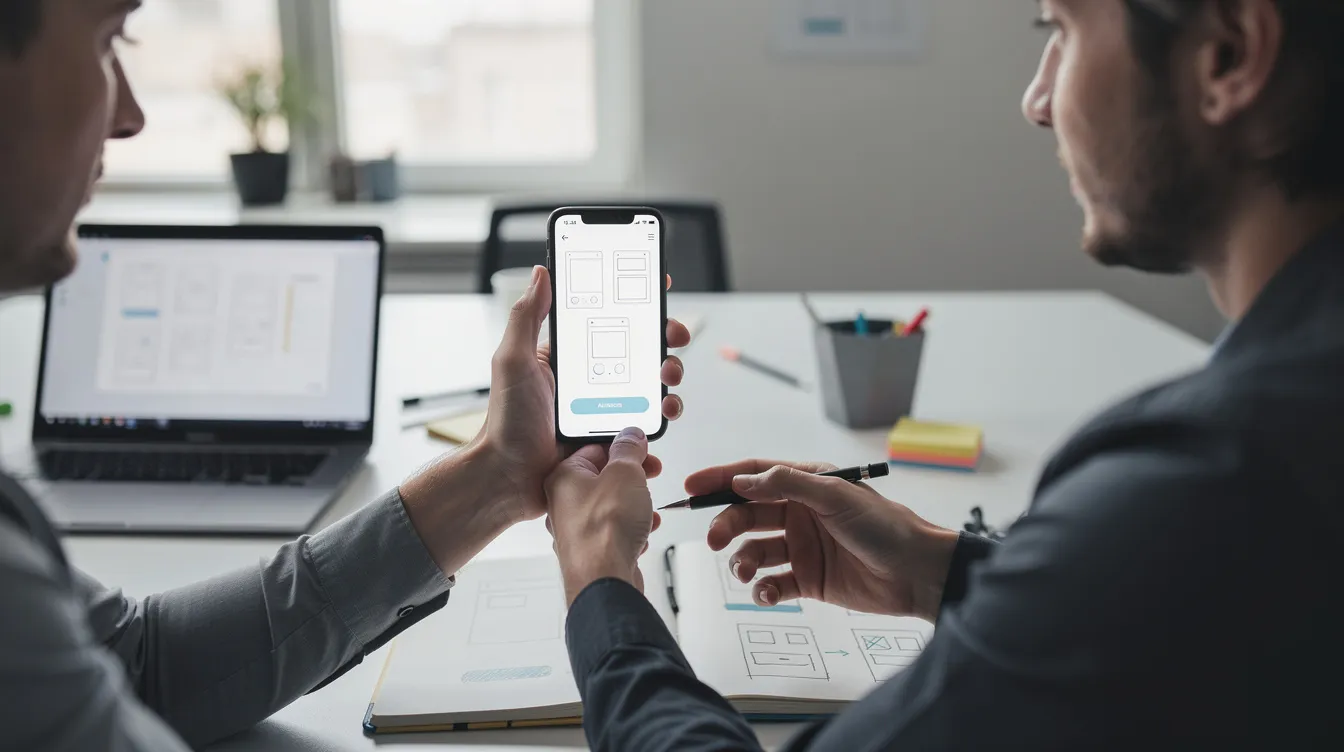
Top Online Courses and Certificates for Aspiring UX UI Designers
The market has shifted from traditional degrees to shorter, skills-focused courses recognised by UK employers.
Online courses can be an effective way to learn UI/UX design, offering a blend of live and pre-recorded content, along with real-time support from tutors. Taking courses can be beneficial for those who prefer structured learning environments, but it’s important to choose reputable programs based on reviews and popularity.
Good options include:
Course | Duration | Recognition |
|---|---|---|
Google UX Design Professional Certificate on Coursera | 3–6 months | Widely known by UK hiring managers as an entry-level credential. |
UX Design Institute Professional Diploma in UX Design | About 6 months | Credit-rated through Glasgow Caledonian University and well recognised in the UK and Ireland. |
Coursera university specialisations, such as CalArts UI/UX courses | Varies | Useful for structured learning, but secondary to portfolio quality. |
Bootcamps such as Designlab or CareerFoundry | 5–10 months | Stronger mentorship and portfolio support, usually higher cost. |
The Google certificate covers the basics of ux design, wireframing, research, and portfolio projects. The UX Design Institute is stronger for structured research depth. Coursera programmes can add knowledge, but the important thing is what you create afterwards.
Combine one recognised certificate with self-initiated projects, mentorship, and maybe a short Scottish college course if you want in-person support.
Career Pathways, Challenges, and Reasons to Choose UX UI Design
A realistic path looks like this: school leaver in 2026, 6–12 months of study and portfolio building, internship or junior role, then progression into ui designer, ux designer, product designer, or senior UX/UI over several years.
The challenges are real:
- junior roles are competitive
- pretty screens are not enough
- case studies must explain decisions
- feedback can be tiring
- tools and technology change quickly
- clients and stakeholders may disagree
UX/UI is not only about making things look nice. It requires writing, research, accessibility, business awareness, collaboration, and constraints.
Still, there are strong reasons to choose this career:
- Long-term demand
More finance, health, education, and government services are moving online. That creates steady demand for designers who can make technology usable. - Remote and hybrid potential
A designer in Scotland can work for Glasgow teams, Edinburgh fintechs, London companies, or international startups. - Real impact
You can improve banking access, healthcare journeys, education platforms, and tools used by real users in the world.

If you are serious, focus on design skills, ui and ux design fundamentals, a small strong portfolio, and one recognised course. Build projects, ask for feedback, improve your resume, and keep applying. With enough practice and persistence, a degree becomes optional rather than essential.